
Chicago Blue Cart Recycling: What Goes In (and What Doesn't) — Your Complete Guide
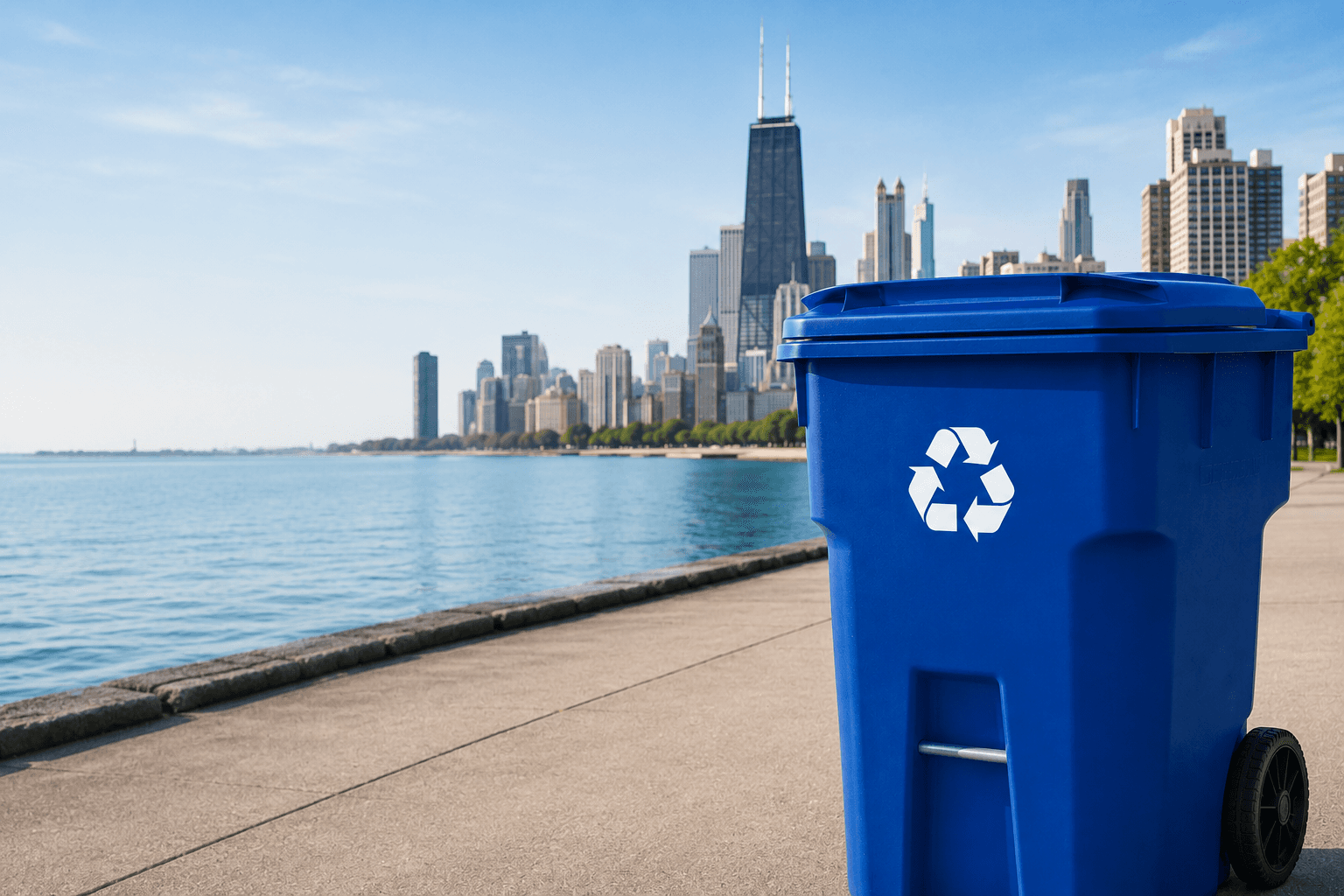
Chicago Blue Cart Recycling: What Goes In (and What Doesn't) — Your Complete Guide
Your blue cart is the easiest recycling tool you have — but only if you're using it right. Chicago's curbside recycling program accepts a lot, but not everything, and knowing the difference keeps the whole system running smoothly.
First, check whether the program covers you. The City's Blue Cart service goes to buildings of one to four units. If you live in a building of five units or more, the City does not collect your recycling — a private hauler arranged by your building owner or property manager does. Under the Chicago Recycling Ordinance those haulers must still accept the common household recyclables below, but ask your building what its program takes.
♻️ What Goes in Your Chicago Blue Cart
Chicago's blue cart program accepts most common household recyclables. Here's what you can toss in:
Paper & Cardboard:
Newspapers, magazines, catalogs, phone books
Office paper, junk mail, envelopes (windows are fine)
Cardboard boxes (flattened)
Paperboard (cereal boxes, shoe boxes, tissue boxes)
Paper bags
Plastic Containers:
Bottles and jugs with necks (soda, milk, detergent, shampoo)
Rigid plastic containers (yogurt cups, deli containers, takeout containers)
Plastic tubs (butter, cottage cheese, ice cream)
Look for the number on the bottom — #1-5 and #7 are accepted. #6 (polystyrene) is not.
Metal:
Aluminum cans (soda, beer, sparkling water)
Steel and tin cans (soup, vegetables, pet food)
Metal lids and caps
Glass:
Bottles and jars (any color)
Food containers
Beverage bottles
Important: Everything should be empty, clean, and dry. You don't need to scrub — a quick rinse is enough. Leave caps and lids on bottles and jars (they'll be sorted at the facility).
🚫 What Does NOT Go in Your Blue Cart
These items contaminate the recycling stream or damage sorting equipment. Keep them out:
Plastic Film & Bags:
Grocery bags, produce bags, bread bags
Plastic wrap, bubble wrap, air pillows
Dry cleaning bags, newspaper sleeves
Chip bags, candy wrappers
Where they go: Store drop-off bins at most major grocery stores
Styrofoam (Polystyrene Foam):
Takeout containers, coffee cups
Packing peanuts, foam blocks
Coolers, foam egg cartons
Where it goes: The trash. Chicago Recycles runs no foam collection events — its programs are food scrap drop-off, the backyard compost bin giveaway, community composting, pumpkin composting, holiday tree recycling and e-waste.
Food-Soiled Paper:
Pizza boxes with grease stains
Used paper plates, napkins, paper towels
Food-contaminated cardboard
Where it goes: Compost (if you have a bin) or trash
Hazardous Materials:
Batteries (rechargeable or single-use)
Electronics (phones, tablets, laptops)
Light bulbs (CFLs, LEDs, incandescent)
Paint cans, motor oil, chemicals
Where they go: Household hazardous waste drop-off sites or electronics recycling events
Other Common Mistakes:
Clothing and textiles (donate or use textile recycling bins)
Diapers, tissues, wipes
Broken glass, ceramics, mirrors
Hoses, extension cords, holiday lights (they tangle sorting equipment)
Propane tanks, fire extinguishers
How to Prep Your Recyclables
Do:
Empty containers completely
Give them a quick rinse (no food residue)
Flatten cardboard boxes to save space
Leave labels on (they'll be removed during processing)
Keep caps on bottles and jars
Don't:
Bag your recyclables (loose items only — bags jam the machines)
Nest containers inside each other (they won't get sorted)
Include items smaller than a credit card (they fall through sorting screens)
Collection Day Tips
Chicago picks up blue carts every other week. Your zone's schedule highlights the week your street is served — look yours up on the City's Blue Cart schedule and maps page, or call 311.
On collection day:
Alley service: put your blue cart out for your entire highlighted week — the exact service day within that week can vary
Curbside service: put your cart out on your garbage day during your highlighted week, unless you are notified otherwise
Have the cart out the night before either way — trucks can arrive as early as 7 a.m.
Place it at least 3 feet away from your trash cart, cars, and other obstacles
Make sure the lid can open fully (don't overfill)
If your cart is damaged or missing, call 311 for a free replacement
When in Doubt, Leave It Out
Contamination is the biggest threat to Chicago's recycling program. When non-recyclables get mixed in, they can ruin entire truckloads of good material. If you're not sure whether something belongs in the blue cart, throw it in the trash or look up the item on the city's recycling website.
The most common contaminants:
Plastic bags (they shut down sorting equipment for hours)
Food waste (it spoils clean paper and cardboard)
Diapers and wipes (yes, people try)
Hoses and cords (they wrap around machinery)
Aerosol cans and lithium-ion batteries (the City names both as contaminants that should never go in a blue cart)
Property Managers & Building Owners: Blue Cart Recycling at Scale
If you manage a multi-unit building or commercial property in Chicago, you're required to provide recycling service to tenants. GreenWay can help you stay compliant with:
Right-sized blue cart or dumpster service
Tenant education materials (what goes where)
Contamination audits to improve diversion rates
Flexible pickup schedules that match your building's needs
Call us at (773) 522-0025 to discuss your property's recycling setup.
Questions About Your Blue Cart?
For city service questions — missed pickups, damaged carts, collection schedules — call 311. For commercial recycling or property management needs, GreenWay is here to help at (773) 522-0025.