
How to Recycle Glass in Chicago: Why It's Not in Your Blue Cart & Where to Take Bottles and Jars
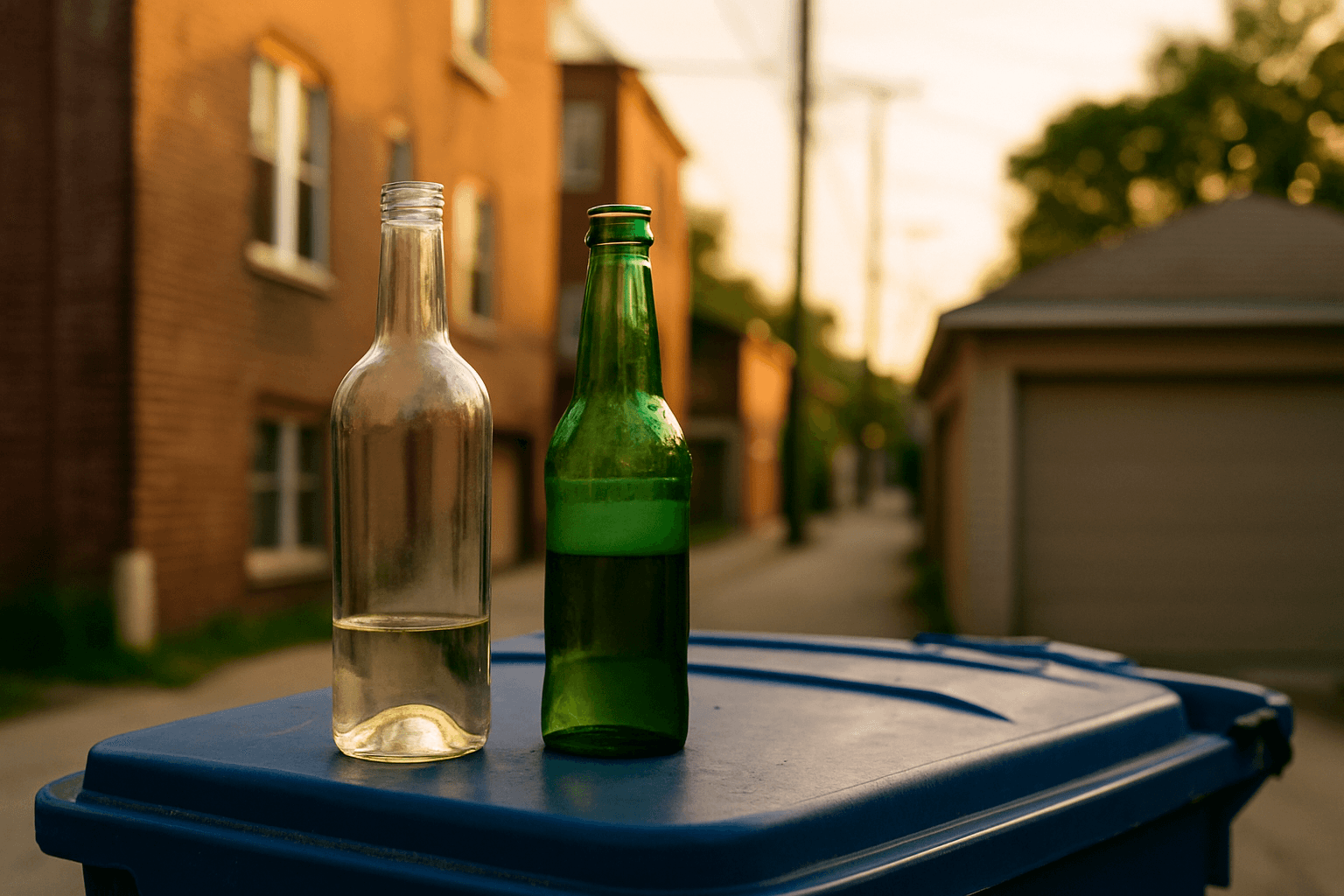
If you've ever stood over your blue cart wondering whether that wine bottle belongs inside, here's the short answer: yes, it does. Chicago's Blue Cart programme accepts glass bottles and jars. The City's own A-Z List of Recycling Opportunities lists "Glass bottles and jars" as accepted, and the same goes for the City's drop-off centres.
This post explains what glass goes in the cart, what doesn't, and how to prepare it.
What Glass Goes in the Blue Cart
Bottles and jars go in. Chicago's recycling is single-stream, so they go loose into the same cart as paper, plastic and metal, and are separated later at a materials recovery facility.
Remove the lids first — the City asks for lids off glass bottles and jars. A quick rinse helps, but the container does not need to be spotless.
What does not belong in the cart is any glass that isn't a bottle or a jar. Drinking glasses, window glass, mirrors, Pyrex and other ovenware, and ceramics are all made to different formulas, melt at different temperatures, and contaminate the batch. Those go in the rubbish, wrapped if broken.
If You Don't Have a Blue Cart
Blue Cart service covers buildings of four units or fewer. If you live in a larger building, recycling is arranged by your building owner or property manager through a private hauler, so ask them where glass goes.
The City also runs residential drop-off centres, open seven days a week during daylight hours, which take everything the Blue Cart programme takes — including glass. There is no separate glass-only bin network.
♻️ What You Can Recycle
Accepted:
Beer and wine bottles
Soda and juice bottles
Food jars (pasta sauce, pickles, jam, etc.)
Clear, green, and brown glass containers
Not accepted:
Window glass or mirrors
Drinking glasses, mugs, or dishware
Pyrex or other heat-resistant glass
Light bulbs — the City's household chemicals facility takes compact fluorescent bulbs and tubes; other bulbs go in the rubbish
Ceramics or porcelain
Glass with metal or plastic lids still attached
If it held food or beverages, it's probably OK. If it didn't, it's not.
How to Prep Glass for Recycling
Rinse it. You don't need to scrub, but remove food residue. No need to remove labels — they burn off during reprocessing.
Remove lids and caps. Metal lids go in your blue cart. Plastic caps can go in store drop-off bins (if they're #2 or #4) or your blue cart if your local MRF accepts them.
Don't bag it. Drop glass loose into the bin. Bagging creates contamination.
Leave broken glass at home. If a bottle breaks, wrap the shards in newspaper and dispose of them in your regular trash. Loose shards are a hazard for the crews and sorters who handle the material.
What Happens to Recycled Glass?
Glass is infinitely recyclable — it doesn't degrade no matter how many times it's melted down. Once it has been collected:
It's sorted by color (clear, green, brown)
Contaminants (metal caps, labels, ceramics) are removed
It's crushed into cullet (small glass pieces)
Cullet is sold to bottle manufacturers, who melt it to make new containers
It can also be used as aggregate in concrete, sandblasting material, or fiberglass insulation
Recycling glass uses 30% less energy than making new glass from raw materials (sand, soda ash, limestone). It also reduces mining and keeps heavy, bulky waste out of landfills.
The Bottom Line
Glass bottles and jars go straight in the blue cart — no special trip needed. Rinse them, take the lids off, and put them in loose. Drinking glasses, window glass, Pyrex and ceramics are the exceptions and belong in the rubbish. If your building has no blue cart, a City drop-off centre takes the same materials.